


Most people believe car accident lawsuits drag on for years in court, but here’s the truth: over 95% settle before trial. If you’ve been in an accident in San Diego, Chula Vista, or the surrounding area understanding how these claims work can mean the difference between walking away empty-handed or securing fair compensation. California laws allow you to recover damages even when partially at fault, making it critical to know your rights and the legal process.
Table of Contents
- Introduction To Car Accident Lawsuits
- Legal Framework And Negligence Elements
- Fault Determination And Liability In California
- Types Of Damages Recoverable In Car Accident Lawsuits
- Importance Of Evidence And Documentation
- Timeline And Duration Of Lawsuits
- Common Misconceptions And Realities About Car Accident Lawsuits
- Practical Steps And Benefits Of Hiring A Personal Injury Lawyer
- Legal Help For Your Car Accident Case In Chula Vista
- FAQ
Key takeaways
| Point | Details |
|---|---|
| Negligence proof required | Car accident lawsuits succeed when you prove duty, breach, causation, and damages under California law. |
| Comparative fault applies | California allows recovery even if you’re partially at fault, but your compensation decreases by your fault percentage. |
| Evidence drives outcomes | Police reports, medical records, photos, and witness statements significantly strengthen your claim and settlement value. |
| Legal help increases compensation | Representation boosts settlements by 3.5 times on average compared to handling claims alone. |
| Time limits matter | California requires filing lawsuits within 2 years of the accident date. |
Introduction to car accident lawsuits
A car accident lawsuit is a legal claim filed when an injured party seeks compensation from the at-fault driver or other responsible parties. These lawsuits become necessary when insurance negotiations fail or when damages exceed policy limits. Understanding your rights as a victim means knowing that California law protects your ability to pursue full compensation for injuries, lost wages, and pain.
The lawsuit process unfolds in distinct stages. First, you file a claim with relevant insurance companies. If negotiations stall, your Chula Vista car accident attorney files a formal lawsuit in court. Discovery follows, where both sides exchange evidence. Most cases settle during this phase. If settlement fails, the case proceeds to trial where a judge or jury decides the outcome.
For San Diego and Chula Vista residents, local court procedures and regional insurance practices shape how claims progress. Acting quickly matters because evidence deteriorates, witnesses forget details, and California’s statute of limitations creates hard deadlines. Taking the right legal steps after a car accident in Chula Vista protects your ability to file a successful claim.
Victims should document everything immediately. Photograph vehicle damage and injuries. Collect contact information from witnesses. Seek medical attention even for minor pain. These actions create the foundation for proving your case later. Starting evidence gathering after car accidents within hours of the incident preserves critical proof that insurance adjusters and defense lawyers cannot dispute.
Key initial actions include:
- Call 911 to create an official police report
- Exchange insurance information with all drivers involved
- Take photos of the accident scene from multiple angles
- Write down your account while memories remain fresh
- Notify your insurance company within required timeframes
Legal framework
California car accident lawsuits rest on proving negligence, which requires establishing four distinct elements. Duty, breach, causation, and damages form the legal backbone of every successful claim. Without proving all four, your lawsuit fails regardless of how severe your injuries appear.
Duty means the at-fault driver owed you a legal obligation to drive safely. California law establishes this automatically: every driver must follow traffic rules and operate vehicles with reasonable care. This element rarely faces dispute because sharing the road creates mutual duties among all motorists.
Breach occurs when the driver violates that duty through careless or reckless actions. Running a red light, texting while driving, or driving drunk all constitute breaches. Evidence like traffic citations, witness statements, and accident reconstruction reports prove breach. The stronger your proof of rule violations, the clearer the breach becomes.
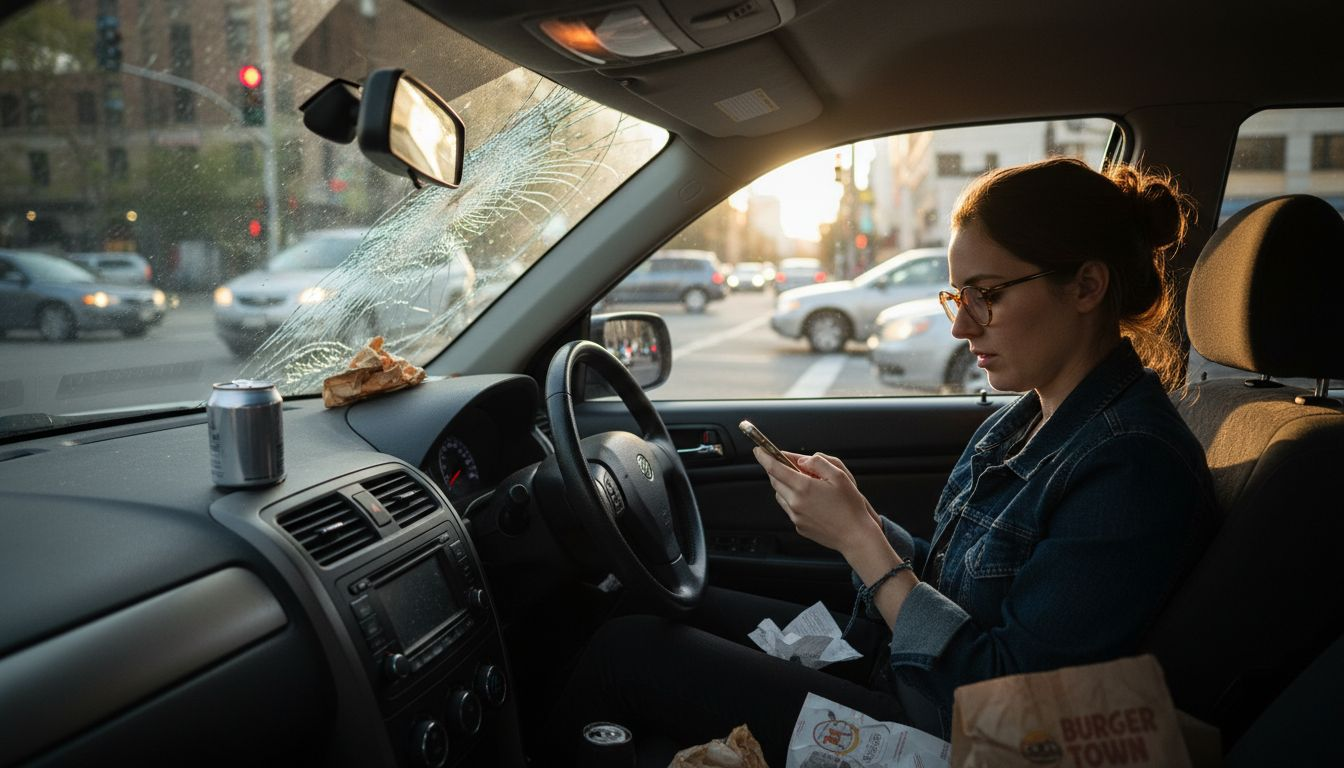
Causation links the breach directly to your injuries. You must show the driver’s actions caused the accident, and the accident caused your specific injuries. Pre-existing conditions complicate this element. Defense attorneys often argue your back pain existed before the crash. Medical records showing injury onset timing counter these arguments effectively.
Damages represent the actual harm you suffered. Physical injuries, medical bills, lost income, and emotional trauma all qualify. California requires concrete proof: hospital records, pay stubs, expert testimony, and documented therapy sessions. Saying you’re hurt isn’t enough. You must quantify and verify every claimed loss.
Consider these examples:
- A driver runs a stop sign (breach of duty to obey traffic signals), hits your car (causation), and you suffer a broken arm requiring surgery (damages).
- A trucker drives 18 hours straight (breach of hours-of-service regulations), falls asleep at the wheel (causation), and causes a multi-vehicle pileup injuring several people (damages).
- A distracted driver texts while entering an intersection (breach of California’s hands-free law), strikes a pedestrian (causation), causing traumatic brain injury (damages).
Pro Tip: Insurance adjusters scrutinize causation aggressively. They’ll claim your injuries stemmed from prior accidents or unrelated conditions. Gather medical records proving you were healthy before the crash, and ensure doctors document clear connections between the accident and each injury.
Challenges arise when multiple factors contribute to accidents. Rainy weather plus speeding creates shared causation questions. When you bear partial fault, California’s comparative system adjusts damages accordingly. Understanding these legal articles helps you anticipate defense strategies before they weaken your claim.
Fault determination in California
California follows a pure comparative negligence system, meaning a plaintiff found more than 50% at fault in a negligence action is not barred from recovery but instead has their damages reduced in proportion to their percentage of fault. Unlike modified comparative negligence jurisdictions that completely bar recovery when a plaintiff’s fault reaches or exceeds 50%, California allows recovery regardless of the plaintiff’s degree of fault.
Here’s how it works mathematically. If your total damages equal $100,000 and you’re 20% at fault, you receive $80,000. The 20% reduction reflects your portion of responsibility.
Insurance adjusters manipulate fault assignments to minimize payouts. They’ll claim you were speeding or failed to brake in time, inflating your fault percentage. Police reports carry weight but aren’t conclusive. Witness testimony, traffic camera footage, and accident reconstruction often determine final fault allocation in court.
Understanding California car accident fault rules prevents accepting inadequate offers driven by fault uncertainty.
Documenting your perspective immediately helps establish favorable fault allocation:
- Write a detailed statement within 24 hours while memory stays sharp
- Identify witnesses who saw the other driver’s violations
- Note traffic conditions, weather, and visibility factors
- Preserve vehicle damage photos showing impact points and severity
- Obtain dashcam footage if available from your vehicle or nearby cameras
Never admit fault at the scene or to insurance adjusters. Apologizing or saying “I didn’t see you” gets twisted into liability admissions. Stick to facts without assigning blame. Let evidence and legal analysis determine fault percentages through proper channels.
Types of damages recoverable
California law divides recoverable damages into two broad categories: economic and non-economic. Economic damages compensate measurable financial losses with clear dollar values. Non-economic damages address intangible harms like pain and emotional suffering that resist precise calculation.
Economic damages include:
- Medical expenses: emergency room visits, surgeries, physical therapy, medications, future medical care, and assistive devices
- Lost wages: income missed during recovery, including sick days, vacation time used, and reduced earning capacity
- Property damage: vehicle repair or replacement costs, rental car expenses, and damaged personal items
- Out-of-pocket costs: transportation to medical appointments, home modifications for disabilities, and childcare during treatment
Proving economic damages requires meticulous documentation. Save every medical bill, repair estimate, and pay stub. If injuries prevent returning to your previous job, vocational experts testify about lost future earnings. Don’t estimate these figures yourself. Professional documentation creates credibility that speculation cannot match.
Non-economic damages compensate:
- Physical pain and suffering from injuries and treatments
- Emotional distress including anxiety, depression, and PTSD
- Loss of enjoyment of life when injuries prevent hobbies and activities
- Disfigurement and permanent scarring affecting appearance and self-esteem
- Loss of consortium when injuries damage relationships with spouses and family
Quantifying non-economic damages challenges both plaintiffs and juries. California doesn’t cap these damages in most car accident cases, unlike medical malpractice claims. Attorneys use multiplier methods, applying factors of 1.5 to 5 times economic damages based on injury severity. A 3x multiplier on $50,000 in medical bills yields $150,000 for pain and suffering.
Severity drives multipliers higher. Permanent disabilities, traumatic brain injuries, and life-altering conditions justify larger non-economic awards. Soft tissue injuries with full recovery typically receive lower multipliers. Insurance companies resist high non-economic claims aggressively because these damages lack the hard proof economic losses provide.
Challenges in proving non-economic damages include:
- Subjective nature makes jury predictions uncertain
- Defense experts minimize pain severity and psychological impacts
- Pre-existing conditions complicate showing accident-caused suffering
- Gaps in treatment suggest pain wasn’t severe or injuries healed
- Lack of therapy records undermines emotional distress claims
Juries trust evidence over assertions. Therapy records showing weekly PTSD treatment carry more weight than testimony alone. Photos documenting injury progression tell powerful stories. Personal journals describing daily pain struggles humanize abstract suffering. Building comprehensive non-economic damage cases requires consistent documentation from the accident date through trial.
Damages directly influence whether cases settle or proceed to trial. High-value claims with solid evidence encourage reasonable settlement offers. Weak damage proof or liability disputes push cases toward trial. Understanding what you can recover and how to prove it shapes every strategic decision throughout your lawsuit.
Importance of evidence and documentation
Evidence determines whether your lawsuit succeeds or fails. Strong documentation proves negligence, establishes damages, and counters defense arguments. Weak evidence invites lowball settlements or outright claim denials. The difference between $50,000 and $200,000 often rests on evidence quality, not injury severity.
Critical evidence types include:
- Police reports documenting the official accident investigation, traffic violations cited, and officer observations about fault and conditions.
- Medical records linking injuries directly to the accident, showing treatment timelines, and documenting diagnoses, procedures, and prognoses.
- Witness statements from bystanders who saw the accident unfold, providing independent accounts that support or contradict driver claims.
- Photographs and videos capturing vehicle damage, injury severity, accident scene layout, traffic signals, road conditions, and skid marks.
- Expert testimony from accident reconstructionists, medical specialists, and vocational experts explaining complex technical and medical issues to juries.
Timing matters enormously. Skid marks fade within days. Witnesses relocate or forget details. Surveillance footage gets deleted on rolling schedules. Acting within hours of the accident preserves evidence that waiting weeks destroys. Your attorney subpoenas footage and statements, but only if you notify them quickly.
Pro Tip: Create a digital evidence folder immediately after your accident. Photograph injuries daily during the first two weeks, showing bruising progression and healing stages. Scan all medical documents and bills weekly. Back everything up to cloud storage. This organized approach prevents lost records and provides chronological documentation that dramatically strengthens claims.
Police reports carry substantial weight but aren’t infallible. Officers sometimes misidentify fault or omit crucial details. If the report contains errors, you can submit corrections through proper channels. However, changing reports after the fact raises suspicion. Getting accurate information recorded initially prevents these problems.
Medical records must show clear causation. Visit emergency rooms or urgent care immediately, even for seemingly minor pain. Gaps in treatment let defense lawyers argue injuries weren’t serious. Follow all treatment recommendations. Skipping physical therapy appointments suggests you’re exaggerating pain or injuries healed. Consistency in medical care demonstrates injury legitimacy.
Witness testimony proves invaluable when liability disputes arise. Independent third parties have no stake in the outcome, making their accounts more credible than driver statements. Obtain names, phone numbers, and written statements at the scene if possible. Witnesses willing to testify strengthen settlement negotiations because defense attorneys know juries trust neutral observers.
Gathering car accident evidence systematically from day one builds unassailable claims that insurance companies cannot easily dismiss. Evidence transforms your word against theirs into documented facts supporting fair compensation.
Timeline and duration of lawsuits
Car accident lawsuits typically take one to three years from filing to resolution in California. This extended timeline frustrates victims needing immediate financial relief, but understanding why cases take time helps manage expectations and make informed strategic decisions throughout the process.
Several factors extend timelines:
- Medical treatment completion: Cases shouldn’t settle until you reach maximum medical improvement, which can take 12 to 18 months for serious injuries
- Discovery process: Both sides exchange documents, take depositions, and gather expert opinions, often requiring six to 12 months
- Court scheduling backlogs: California courts face heavy caseloads, with trial dates sometimes set 18 to 24 months after filing
- Negotiation attempts: Multiple settlement discussions occur at different case stages, with each round taking weeks or months
- Complexity factors: Multi-vehicle accidents, disputed liability, and severe injuries require additional investigation and expert analysis
Settlements resolve much faster than trials. Many cases settle during early negotiations within six to 12 months. Others settle on the courthouse steps as trial approaches. Only 5% actually proceed through full trials, which add significant time. Trials themselves last days or weeks, followed by potential appeals extending resolution by years.
California imposes a two-year statute of limitations for personal injury lawsuits from the accident date. Missing this deadline bars your claim permanently, regardless of injury severity or damage amount. Some exceptions extend deadlines, like when injuries aren’t immediately discoverable, but relying on exceptions is risky. Filing promptly protects your rights and preserves evidence while fresh.
Timeline expectations by case type:
- Minor injuries with clear liability: 6 to 12 months to settlement
- Moderate injuries with some liability dispute: 12 to 18 months to settlement or trial
- Severe injuries requiring extensive treatment: 18 to 36 months to resolution
- Wrongful death cases: 18 to 48 months due to complexity and high stakes
Patience proves difficult when bills accumulate and income stops. However, settling prematurely often means accepting far less than fair value. Future medical needs and long-term disability impacts only become clear after treatment stabilizes. Rushing settlement to pay immediate bills sacrifices compensation for future losses you’ll desperately need.
Staying informed throughout the process reduces anxiety. Request regular updates from your attorney. Understand what stage your case occupies and what comes next. Ask questions about strategic decisions and timeline projections. Taking timely legal action after car accident means both filing promptly and maintaining engagement through resolution.
Common misconceptions about car accident lawsuits
Misconceptions about car accident lawsuits prevent victims from pursuing valid claims or cause them to make costly strategic mistakes. Separating myths from realities empowers you to make informed decisions that protect your interests and maximize compensation.
| Myth | Reality |
|---|---|
| All lawsuits go to trial | Over 95% settle before trial through negotiations |
| You don’t need a lawyer | Representation increases settlements by 3.5 times on average |
| Partial fault bars recovery in California | Comparative fault allows recovery if you’re partially at fault |
| Insurance pays fair value automatically | Initial offers average 20 to 40% of true claim value |
| Lawsuits take forever | Many settle within 12 to 18 months |
The trial myth scares many victims away from pursuing claims. They imagine lengthy courtroom battles and hostile cross-examinations. In reality, trials rarely happen because both sides prefer settlement certainty over jury unpredictability. Insurance companies know trials risk larger verdicts. Plaintiffs avoid trial costs and delays. This mutual interest drives the high settlement rate.
The “no lawyer needed” myth costs victims enormously. Insurance adjusters seem friendly and helpful initially. They’re trained negotiators working to minimize payouts. Their first offer looks substantial to unrepresented victims but typically represents a fraction of actual damages. Studies consistently show represented claimants receive significantly higher compensation even after attorney fees.
California’s comparative fault law surprises many victims who assume any fault destroys their claim. This misconception causes people to abandon valid claims worth tens of thousands of dollars. If you’re 30% at fault but suffered $100,000 in damages, you still recover $70,000.
Common pitfalls from misinformation:
- Accepting quick settlement offers before understanding full injury extent and treatment costs
- Missing statute of limitations deadlines because you believed more time existed
- Providing recorded statements to insurance adjusters that get twisted into liability admissions
- Posting accident details or injury updates on social media that defense lawyers use against you
- Failing to preserve evidence because you didn’t realize its importance early
Insurance companies exploit these misconceptions through aggressive early settlement offers. They know unrepresented victims unfamiliar with true claim value will accept inadequate amounts. They create urgency suggesting offers expire soon. They imply lawyers will take most of your money. These tactics work only on uninformed victims.
Educating yourself about lawsuit realities protects against manipulation. Understanding the process, your rights, and typical outcomes removes fear and uncertainty that insurance adjusters weaponize. Knowledge transforms you from a vulnerable target into an informed claimant who recognizes fair value and refuses lowball offers.
Benefits of hiring a personal injury lawyer
Taking the right actions immediately after a car accident protects your health, preserves your legal rights, and maximizes your compensation potential. Knowing what to do and when creates the foundation for successful claims regardless of injury severity.
Essential steps after an accident:
- Ensure safety first by moving to a safe location if possible and checking for injuries requiring immediate medical attention.
- Call 911 to report the accident, request police response, and ensure official documentation of the incident.
- Exchange information with all involved drivers, including names, phone numbers, insurance details, and license plate numbers.
- Document the scene thoroughly with photos of vehicle damage, injuries, road conditions, traffic signals, and surrounding context.
- Identify witnesses and collect their contact information and brief statements about what they observed.
- Seek medical evaluation immediately, even without obvious injuries, because some conditions like whiplash emerge hours or days later.
- Notify your insurance company about the accident within required policy timeframes.
- Consult a personal injury attorney before providing recorded statements or accepting settlement offers.
Hiring a qualified attorney transforms your claim’s outcome dramatically. Legal representation increases compensation by an average of 3.5 times compared to self-representation. This multiplier effect occurs because experienced attorneys understand claim valuation, negotiate from strength, and aren’t intimidated by insurance company tactics.
Attorneys provide critical services:
- Investigating accidents thoroughly, obtaining police reports, and interviewing witnesses while evidence remains fresh
- Handling all insurance company communications, preventing statements that damage your claim
- Calculating full damage value including future medical needs and long-term impacts you might overlook
- Negotiating aggressively from positions of strength backed by evidence and legal expertise
- Filing lawsuits when necessary and managing complex court procedures and deadlines
- Hiring expert witnesses who testify about accident reconstruction, medical prognoses, and economic impacts
The Chula Vista car accident lawyer benefits extend beyond higher compensation. Attorneys remove stress by handling legal complexity while you focus on recovery. They work on contingency, charging fees only if you win, eliminating upfront costs. They level the playing field against corporate insurance companies with unlimited legal resources.
Local expertise matters significantly. Attorneys familiar with San Diego and Chula Vista courts understand local procedures, know judges’ tendencies, and have relationships with defense counsel that facilitate productive negotiations. They recognize how regional juries view different case types, informing strategic decisions about settlement versus trial.
Outcome comparison:
Victims who handle claims personally average settlements of $15,000 to $25,000 for moderate injuries. Identical cases with legal representation settle for $50,000 to $80,000 on average. The attorney fee, typically one-third, still leaves significantly more in your pocket than self-representation.
Pro Tip: Consult an attorney within days of your accident, definitely before providing recorded statements to insurance adjusters. Initial consultations are free and create no obligation. Early attorney involvement prevents mistakes that permanently damage claim value. Waiting until problems arise often means damage already occurred that cannot be undone.
Knowing what to do after a car accident and promptly contacting a Chula Vista car accident attorney protects your interests when you’re most vulnerable. Professional guidance ensures you receive every dollar of compensation California law entitles you to receive. Don’t seek legal advice after accident as an afterthought. Make it your first priority.
Legal help for your car accident case in Chula Vista
Navigating a car accident lawsuit alone puts you at a severe disadvantage against insurance companies with unlimited legal resources and experienced claims adjusters trained to minimize payouts. Specialized legal representation levels this playing field and dramatically improves your compensation outcome.
The Law Office of Leif Kleven brings deep expertise in personal injury law specifically focused on accident cases throughout Chula Vista, San Diego, and surrounding communities. Our team understands local court procedures, regional insurance practices, and the unique challenges California accident victims face. We handle everything from initial evidence gathering through settlement negotiations or trial, allowing you to focus on recovery while we fight for maximum compensation.
Whether you’re dealing with serious injuries, disputed liability, or inadequate insurance offers, our experience with Chula Vista car accident attorney representation ensures your rights stay protected. We also provide comprehensive support for families dealing with tragic losses through our Chula Vista wrongful death attorney services. Free consultations mean you risk nothing by learning how we can help. Contact us today through leifkleven.com to discuss your case and understand your legal options before time limits expire.
FAQ
What is the typical timeline for a car accident lawsuit in California?
Most car accident lawsuits in California take one to three years from filing to final resolution. Cases settling early through negotiations often resolve within six to 12 months. Complex cases involving severe injuries or disputed liability can extend to three years or more, especially if they proceed to trial.
How does California’s comparative fault law affect my car accident claim?
California’s comparative fault system reduces your compensation by your percentage of fault. For example, if you’re 30% at fault for an accident causing $100,000 in damages, you can still recover $70,000.
Why should I hire a personal injury lawyer after a car accident?
Personal injury lawyers increase settlement amounts by an average of 3.5 times compared to self-representation. They handle complex legal procedures, gather evidence effectively, negotiate from positions of strength, and protect you from insurance company tactics designed to minimize payouts. Most work on contingency, so you pay nothing unless you win.
What types of damages can I recover from a car accident lawsuit?
You can recover economic damages including medical expenses, lost wages, property damage, and future care costs. Non-economic damages compensate pain and suffering, emotional distress, loss of enjoyment of life, and disfigurement. California doesn’t cap non-economic damages in most car accident cases, allowing substantial recovery for severe injuries.
How long do I have to file a car accident lawsuit in California?
California’s statute of limitations requires filing personal injury lawsuits within two years from the accident date. Missing this deadline permanently bars your claim regardless of injury severity. Some limited exceptions extend this period, but relying on them is risky. Consulting an attorney promptly ensures you don’t lose your right to compensation.


