


California motorcycle riders face a complex web of accident risks driven by diverse traffic conditions, road environments, and rider behaviors. Choosing the right safety measures requires understanding which tips deliver proven protection in both urban congestion and rural hazards. This guide provides evidence-based strategies tailored to reduce your accident risk across California’s varied riding landscapes in 2026.
Table of Contents
- Selection Criteria For Effective Motorcycle Safety Tips
- Helmet Use And Protective Gear
- Rider Training Programs And Benefits
- Safe Riding Practices: Speed Control And Situational Awareness
- Avoiding Impairment And Risky Behaviors
- Economic And Legal Implications Of Motorcycle Accidents In California
- Summary Comparison And Situational Safety Picks
- Get Expert Help After A Motorcycle Accident
- Frequently Asked Questions
Key takeaways
| Point | Details |
|---|---|
| California riders face elevated accident risks from traffic density and rider behavior | Understanding local risk factors helps prioritize safety measures effectively |
| DOT-certified helmets and protective gear reduce injury severity significantly | Helmet use rates reach 94% in fatal crashes, demonstrating compliance and protection value |
| Formal training through CMSP improves rider skills and lowers crash rates | Over 1.5 million riders trained since 1987 with measurable safety improvements |
| Speed control and situational awareness prevent over one-third of fatal crashes | Speeding contributes to 36% of fatal motorcycle crashes nationwide |
| Avoiding alcohol impairment drastically reduces fatal crash likelihood | 26% of fatal crashes involve riders over legal BAC limits |
Selection criteria for effective motorcycle safety tips
Before adopting any safety measure, you need a framework to evaluate what actually works. The most effective motorcycle safety tips share common characteristics that separate proven strategies from well-meaning but ineffective advice.
Prioritize measures backed by accident reduction data. Safety recommendations supported by crash statistics and research studies demonstrate real-world effectiveness. Look for tips validated by California Highway Patrol data, CDC research, or independent safety organizations tracking motorcycle accidents.
Consider your primary riding environment. Urban riding demands different safety approaches than rural routes. Dense city traffic requires heightened awareness of surrounding vehicles, while rural roads present hazards like wildlife, limited visibility, and road surface conditions. Select safety measures that address the specific challenges you encounter most frequently.
Key factors when evaluating safety tips:
- Evidence of measurable accident reduction or injury prevention
- Compliance with California helmet laws and training requirements
- Applicability to both urban congestion and rural riding conditions
- Addressing high-risk behaviors like speeding and alcohol use
- Economic feasibility balanced against potential injury costs
Compliance with California regulations ensures your safety measures meet legal standards while protecting your rights after an accident. Understanding which behaviors the state mandates versus recommends helps you prioritize investments in training, gear, and riding practices that deliver maximum protection.
Helmet use and protective gear
California law requires all motorcycle riders to wear DOT-certified helmets, creating one of the nation’s highest compliance rates. California has one of the highest helmet usage rates among fatal riders (94%), and helmets reduce head injury risks substantially. This near-universal adoption demonstrates both legal enforcement effectiveness and rider recognition of helmet value.
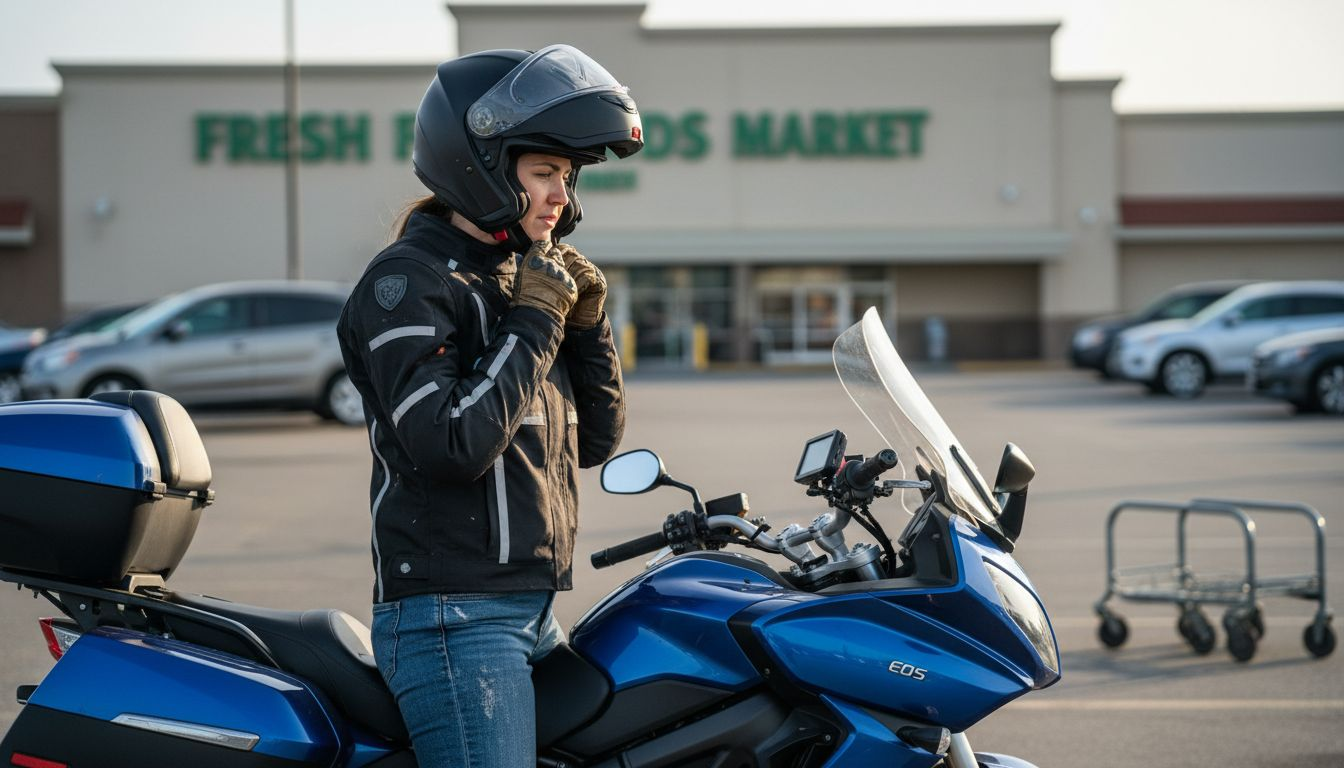
Full-face helmets provide superior protection compared to open-face or half helmets. The complete facial coverage shields against road debris, weather elements, and impact injuries that commonly occur in frontal collisions. DOT certification ensures helmets meet minimum safety standards, though SNELL or ECE ratings offer additional assurance of crash protection performance.
Protective gear beyond helmets significantly reduces injury severity in accidents:
- Abrasion-resistant jackets and pants protect skin from road rash during slides
- Reinforced gloves prevent hand and wrist injuries while maintaining grip control
- Sturdy boots protect feet, ankles, and lower legs from crush injuries and burns
- Body armor inserts add impact protection for shoulders, elbows, back, and knees
Helmet laws in states with universal helmet requirements reduce fatality rates significantly, with unhelmeted fatalities only 9% versus 55% in non-law states. California’s universal helmet law directly contributes to this life-saving effect by ensuring consistent protection across all riders.
Investing in quality protective gear pays dividends when accidents occur. While initial costs may seem high, the medical expenses and lost income from severe injuries far exceed gear investments. Many riders find that proper protective gear legal advice becomes necessary after accidents where inadequate protection worsened injuries.
Wearing DOT-certified helmets and full protective gear creates your first line of defense against California’s diverse riding hazards, from urban intersections to mountain curves.
Rider training programs and benefits
The California Motorcyclist Safety Program (CMSP) offers structured training that builds essential riding skills through classroom instruction and hands-on practice. CMSP has trained over 1.5 million riders since 1987; mandatory training for riders under 21 and recommended for all enhances safety. This extensive track record demonstrates the program’s effectiveness in reducing accident rates among trained riders.
CMSP’s Basic Rider Course combines 5 hours of classroom education with 10 hours of motorcycle operation training. You’ll learn fundamental skills including starting, stopping, turning, and emergency maneuvers on a closed course before facing real traffic. Instructors provide motorcycles and helmets, removing barriers for new riders who haven’t yet purchased equipment.
The Premier Program offers 21 hours of advanced classroom and riding training, improving hazard recognition and crash avoidance skills. This intensive course covers complex scenarios like group riding, night operation, and adverse weather conditions that challenge even experienced riders.
Training benefits extend beyond basic motorcycle control:
- Enhanced hazard perception helps you identify dangers before they become critical
- Improved emergency response develops muscle memory for quick braking and swerving
- Understanding traffic patterns reduces collision risk in complex intersections
- Confidence building encourages safer decision-making under pressure
- Insurance discounts reward completed training with lower premium rates
Completing CMSP training may waive your DMV riding skills test, streamlining the licensing process while ensuring you meet California’s safety standards. The course certificate demonstrates to insurance companies and law enforcement that you’ve invested in proper skill development.
Pro Tip: Schedule training during moderate weather months when learning conditions are optimal. Early spring or fall courses let you practice without extreme heat or unexpected rain that can complicate skill development.
Exploring motorcycle training benefits through professional programs gives you skills that directly translate to reduced accident risk across California’s varied riding environments.
Safe riding practices: speed control and situational awareness
Speed management remains one of the most critical factors in preventing motorcycle accidents. Speeding was involved in 36% of fatal motorcycle crashes, making speed control one of the most effective prevention methods. Excessive speed reduces your reaction time, increases stopping distance, and magnifies collision forces when accidents occur.
Defensive riding strategies help you anticipate and avoid hazards created by other road users. Assume drivers don’t see you and position yourself to maximize visibility. Maintain escape routes by avoiding blind spots and keeping space cushions around your motorcycle. Watch for turn signals, brake lights, and vehicle positioning that telegraph driver intentions before they act.
California’s diverse riding environments demand adapted safety approaches:
- Urban areas require constant vigilance for opening car doors, pedestrians, and sudden lane changes
- Highway riding demands awareness of high-speed merging traffic and wind gusts from passing trucks
- Rural roads present challenges from wildlife crossings, gravel patches, and limited sight lines
- Mountain routes require skilled cornering, brake management, and attention to changing road surfaces
Lane splitting legality in California offers safety benefits when done cautiously. Filtering through stopped or slow traffic reduces rear-end collision risk while improving traffic flow. Stay within 10 mph of surrounding traffic and never exceed 30 mph while splitting to maintain control and reaction capability.
Situational awareness extends beyond immediate surroundings. Monitor weather forecasts before rides and adjust plans when conditions deteriorate. Rain creates slippery surfaces that double stopping distances, while fog eliminates the visibility advantage motorcycles need for safety. Strong winds challenge stability and control, especially on exposed highway sections or when passing large vehicles.
Pro Tip: Develop a pre-ride mental checklist covering motorcycle condition, gear readiness, and route hazards. This ritual focuses your attention and ensures you start every ride prepared for safe operation.
Your riding behavior determines accident risk more than any external factor. Control what you can control through disciplined speed management and continuous environmental scanning.
Enhancing urban riding awareness through defensive techniques protects you from the unpredictable actions of distracted drivers in California’s congested metropolitan areas.
Avoiding impairment and risky behaviors
Alcohol impairment dramatically increases crash severity and fatality rates among motorcycle riders. 26% of fatal motorcycle crashes involved riders with blood alcohol content over the legal limit, highlighting the critical danger of impaired riding. Even small amounts of alcohol reduce coordination, judgment, and reaction time that motorcyclists depend on for safe operation.
Impairment affects motorcycle riding more severely than car driving. Motorcycles require constant balance adjustments and precise control inputs that become impossible when alcohol or drugs compromise motor skills. The exposed nature of motorcycles means impaired riders lack the protective cage that might reduce injury severity in car accidents.
California DUI penalties for motorcyclists match those for other vehicle operators:
- First offense brings license suspension, fines up to $3,600, and possible jail time
- Enhanced penalties apply when BAC exceeds 0.15% or accidents cause injuries
- Repeat offenses trigger longer suspensions, mandatory ignition interlock, and felony charges
- Commercial motorcycle operators face stricter BAC limits and career-ending consequences
Beyond alcohol, prescription medications and recreational drugs impair riding ability. Many common medications carry warnings against operating machinery, including motorcycles. Drowsiness, dizziness, or delayed reactions from medication create accident risks comparable to alcohol impairment.
Zero tolerance for impairment saves lives. If you plan to drink, arrange alternative transportation before your first beverage. Your life and others’ lives depend on this simple decision.
Recognizing personal limits extends to fatigue and emotional state. Riding while exhausted, angry, or distracted compromises the focus required for safe motorcycle operation. Long rides require regular rest stops to maintain alertness and physical comfort.
Understanding legal risks of impaired riding helps you appreciate both the safety and legal consequences of operating a motorcycle under the influence in California.
Economic and legal implications of motorcycle accidents in California
Motorcycle accidents impose substantial financial burdens on riders and families beyond immediate medical costs. Fatal crashes generate average costs exceeding $1.2 million when accounting for medical care, emergency response, legal proceedings, and lost lifetime earnings. Non-fatal injury crashes still produce six-figure expenses through hospital stays, rehabilitation, motorcycle replacement, and income loss during recovery.
California’s fault-based insurance system requires determining which party caused the accident before claims proceed. This process becomes complex when multiple vehicles contribute to crashes or when disputed facts require investigation. Understanding your rights under California law protects your financial recovery after accidents.
Legal representation significantly impacts settlement outcomes:
- Experienced attorneys navigate insurance company tactics designed to minimize payouts
- Documentation of injuries, property damage, and economic losses supports fair compensation
- Knowledge of California personal injury statutes ensures claims meet filing deadlines
- Negotiation skills secure settlements without protracted litigation when possible
- Trial experience provides leverage when insurance companies refuse reasonable offers
Medical expenses from serious motorcycle injuries quickly exhaust standard insurance policy limits. Traumatic brain injuries, spinal damage, and multiple fractures require extensive treatment that continues for months or years. Without adequate insurance coverage or legal assistance recovering from at-fault parties, injured riders face financial devastation alongside physical recovery challenges.
Prompt action after accidents preserves evidence and protects your legal rights. Waiting to seek legal counsel allows critical evidence to disappear, witnesses to become unavailable, and insurance companies to establish narratives that minimize your claim value. California’s statute of limitations provides limited time windows for filing personal injury lawsuits.
Taking proper legal steps after motorcycle accidents ensures you protect your financial interests while focusing on physical recovery. Professional guidance through the claims process often means the difference between fair compensation and inadequate settlements that leave you bearing accident costs.
Exploring strategies for maximizing accident settlement values helps you understand how attorneys build strong cases that secure full compensation for your injuries and losses.
Summary comparison and situational safety picks
Different safety measures offer varying levels of protection depending on your riding experience, typical routes, and risk tolerance. This comparison helps you prioritize investments in training, equipment, and practices that deliver maximum accident prevention for your situation.
| Safety Measure | Protection Level | Cost Investment | Best For | Implementation Challenge |
|---|---|---|---|---|
| DOT Full-Face Helmet | Very High | $150-$600 | All riders, all conditions | Minimal (required by law) |
| Complete Protective Gear | High | $500-$1,500 | All riders, especially highway | Moderate (comfort in heat) |
| CMSP Basic Training | High | $350-$400 | New riders, license seekers | Low (time commitment) |
| CMSP Premier Program | Very High | $500-$600 | Experienced riders seeking advanced skills | Moderate (21-hour commitment) |
| Defensive Riding Techniques | High | Free (practice) | Urban and highway riders | Moderate (requires discipline) |
| Speed Limit Compliance | Very High | Free | All environments | High (requires constant attention) |
| Zero Alcohol/Drug Use | Very High | Free | All riders | Moderate (lifestyle adjustment) |
| Regular Motorcycle Maintenance | Medium | $200-$500/year | All riders | Low (scheduled service) |
New riders should prioritize CMSP training completion, DOT-certified full-face helmets, and complete protective gear before attempting challenging routes. This foundation builds essential skills while maximizing physical protection during the learning curve when accident risk peaks.
Experienced riders benefit from advanced training refreshers, upgraded protective gear as technology improves, and heightened focus on defensive riding strategies. Complacency increases with experience, making conscious recommitment to safe practices essential for long-term accident avoidance.
Urban riders face greatest risks from distracted drivers, intersection collisions, and door strikes. High-visibility gear, defensive positioning, and escape route planning reduce these specific hazards. Lane splitting skills help when traffic stops suddenly, preventing rear-end collisions.
Rural riders must prepare for wildlife encounters, road surface hazards, and limited emergency services. Bright headlights, reflective gear, and speed moderation on unfamiliar roads address these challenges. Carrying emergency communication devices ensures help arrives quickly if accidents occur in remote areas.
Comparing protective gear comparison options helps you select equipment that balances protection, comfort, and budget while meeting California’s varied riding conditions.
Get expert help after a motorcycle accident
Even with the best safety practices, accidents happen due to factors beyond your control. Other drivers’ negligence, road hazards, and vehicle defects can cause crashes despite your careful riding. When accidents occur, experienced legal representation protects your rights and maximizes your financial recovery.
The Law Office of Leif Kleven specializes in motorcycle accident cases throughout San Diego County and surrounding areas. We understand the unique challenges motorcyclists face in injury claims, from insurance company bias to complex liability determinations. Our team provides free consultations to evaluate your case and explain your legal options without financial risk.
Navigating California’s personal injury system requires knowledge of statutes, insurance regulations, and negotiation strategies that level the playing field against corporate defendants. We handle all aspects of your claim while you focus on physical recovery. Understanding what to expect in a personal injury lawsuit helps you make informed decisions about legal representation.
Taking immediate legal steps after an accident preserves evidence, protects your rights, and positions your case for successful resolution. Contact us today to discuss how we can help you secure fair compensation for your injuries and losses.
Frequently asked questions
What are the most effective motorcycle accident safety tips in California?
Prioritize wearing DOT-certified full-face helmets and complete protective gear on every ride. Enroll in CMSP training courses to build essential riding skills and hazard recognition abilities. Practice speed control and defensive riding techniques tailored to your typical routes. Never ride after consuming alcohol or drugs that impair coordination and judgment.
How does rider training influence motorcycle safety in California?
CMSP training reduces accident risk by building critical riding skills and hazard awareness through structured classroom and practical instruction. Trained riders demonstrate better emergency response, improved traffic pattern recognition, and enhanced control in challenging conditions. Exploring rider training benefits reveals how formal education translates directly to reduced crash rates.
What should I do legally after a motorcycle accident in California?
Document the accident scene with photos, gather witness contact information, and seek immediate medical attention even for seemingly minor injuries. Report the crash to law enforcement and your insurance company as required by California law. Contact an experienced attorney promptly to protect your rights and navigate the claims process. Understanding proper legal steps after an accident ensures you preserve evidence and meet critical filing deadlines.
Does protective gear really prevent injuries in motorcycle accidents?
Protective gear significantly reduces injury severity even when it cannot prevent all harm. Helmets prevent fatal head injuries and reduce traumatic brain injury risk by absorbing impact forces. Abrasion-resistant clothing prevents road rash that causes infection and scarring. Reinforced boots and gloves protect extremities from fractures and crush injuries common in motorcycle crashes.
How do California’s helmet laws compare to other states?
California requires all motorcycle riders and passengers to wear DOT-certified helmets regardless of age or experience level. This universal helmet law produces higher usage rates and lower fatality rates compared to states with partial requirements or no helmet laws. California’s approach prioritizes rider safety through comprehensive protection mandates backed by enforcement.
Recommended
- Chula Vista Motorcycle Accidents Attorney – Chula Vista Personal Injury Attorney
- Chula Vista Bicycle Accident Attorney – Chula Vista Personal Injury Attorney
- Injured on a Scooter in San Diego? Here’s How Attorney Leif Kleven Can Help – Chula Vista Personal Injury Attorney
- San Diego Rideshare Accident Attorney – Chula Vista Personal Injury Attorney


