










For the past few weeks, we’ve focused on the twists and turns of car accident claims. But injuries don’t just happen on the road. Sometimes, the danger lies underfoot – a wet floor, a broken step, an uneven sidewalk. When you’re injured on someone else’s property due to unsafe conditions, you might be looking at a premises liability case. If this happens to you, understanding your rights is crucial, and we’re here to guide you through the process.
While the setting is different, the core idea is similar to other injury claims: someone had a responsibility (a “duty of care”), they failed in that responsibility (“breach”), and that failure caused harm (“causation” and “damages”). Let’s break down what that means in the context of a property hazard, often illustrated by the common “slip and fall” scenario.
What is Premises Liability?
In simple terms, premises liability law holds property owners or the person/entity in control of the property responsible for maintaining the property in a reasonably safe condition for lawful visitors. This doesn’t mean properties have to be perfectly hazard-proof, but owners must take reasonable steps to:
- Fix dangerous conditions they know about.
- Warn visitors about dangerous conditions they cannot immediately fix.
- Regularly inspect the property to discover potential hazards they should reasonably know about.

Examples of premises liability cases include:
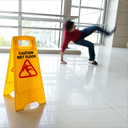
- Slip and falls (wet floors, icy patches, spills)
- Trip and falls (uneven surfaces, broken stairs, clutter, poor lighting)
- Inadequate security leading to assault
- Dog bites (often falls under premises liability)
- Swimming pool accidents
The Slip and Fall Example: What Needs to Be Proven?
Just because you fell on someone’s property doesn’t automatically mean they are legally responsible for your injuries. To have a successful premises liability claim, you (the injured party, or plaintiff) generally need to prove four key elements:
- Duty of Care: The property owner/controller owed you a duty to keep the premises reasonably safe or warn of non-obvious dangers.
- Breach of Duty: The owner failed in that duty. This often requires showing they knew or should have known about the hazard and didn’t act reasonably.
- Causation: The unsafe condition directly caused your fall and injuries.
- Damages: You suffered actual harm (medical bills, lost wages, pain and suffering, etc.).
Proving these elements, especially the breach of duty and the owner’s knowledge, can be challenging.
What to Expect: The Process of a Premises Liability Claim
If you’ve been injured on someone else’s property, here’s a general idea of what might happen next:
- Immediate Aftermath: Seek medical attention, report the incident to the owner/manager, and document everything (photos, witnesses, conditions).
- Initial Contact & Investigation: You’ll likely deal with the owner’s insurance. Be cautious. Their goal is often to minimize payouts. As an experienced litigation lawyer, Leif Kleven works on your behalf to make sure you receive the maximum compensation.
- Establishing Liability & Damages: Gathering evidence to prove the four elements and calculating the full extent of your damages.
- Negotiation & Settlement: Most cases settle out of court through negotiation.
- Filing a Lawsuit (If Necessary): If a settlement cannot be reached, then a lawsuit begins the formal court process.
- Discovery: Formal exchange of information (documents, questions, testimony).
- Mediation/Alternative Dispute Resolution: Attempting settlement with a neutral mediator.
- Trial: Presenting the case to a judge or jury if no settlement is reached.
Navigating this process alone, especially while recovering, can be daunting. Insurance companies have professionals working for them; shouldn’t you? If you’re feeling unsure about your rights or how to proceed after an injury on someone else’s property here in California, contact our office today for a free consultation. We can explain your specific situation.
Common Defenses & Why Legal Help is Crucial
Property owners may argue the hazard was “open and obvious,” that you were partially at fault (“comparative negligence,” which can reduce your recovery in California), or that they had no notice of the danger.
This is where experienced legal counsel becomes invaluable. An attorney specializing in premises liability, like attorney Leif Kleven, understands how to counter these defenses. We can help you:
- Investigate the incident thoroughly to prove negligence.
- Deal effectively with insurance adjusters focused on limiting your claim.
- Gather all necessary evidence, including medical records, witness statements, and potentially expert opinions.
- Accurately value your total damages, including pain and suffering.
- Navigate the complex legal procedures and deadlines.
- Advocate fiercely for your rights, whether in negotiation or in court.
Don’t try to handle a complex premises liability claim alone. We fight for the full compensation you deserve.
Key Takeaway & Your Next Step
Premises liability cases require proving property owner negligence caused your injury. It’s more complex than simply falling. If you or a loved one has suffered an injury due to unsafe property conditions in California, don’t delay. Evidence can disappear, and memories fade.
Contact the Law Office of Leif Kleven today at 619-796-3680 to schedule a free, no-obligation case review. Let us help you understand your options and take the right steps forward.
You may also be interested in these related pages:
Keywords
Premises Liability Claim
Slip and Fall Accident / Case
Trip and Fall Injury
Property Owner Responsibility / Negligence
Duty of Care (Property Owner)
Breach of Duty
Unsafe Property Conditions / Hazardous Conditions
Reasonable Care (Property Maintenance)
Knew or Should Have Known (Hazard Notice)
Causation (Injury Cause)
Damages (Injury Compensation)


